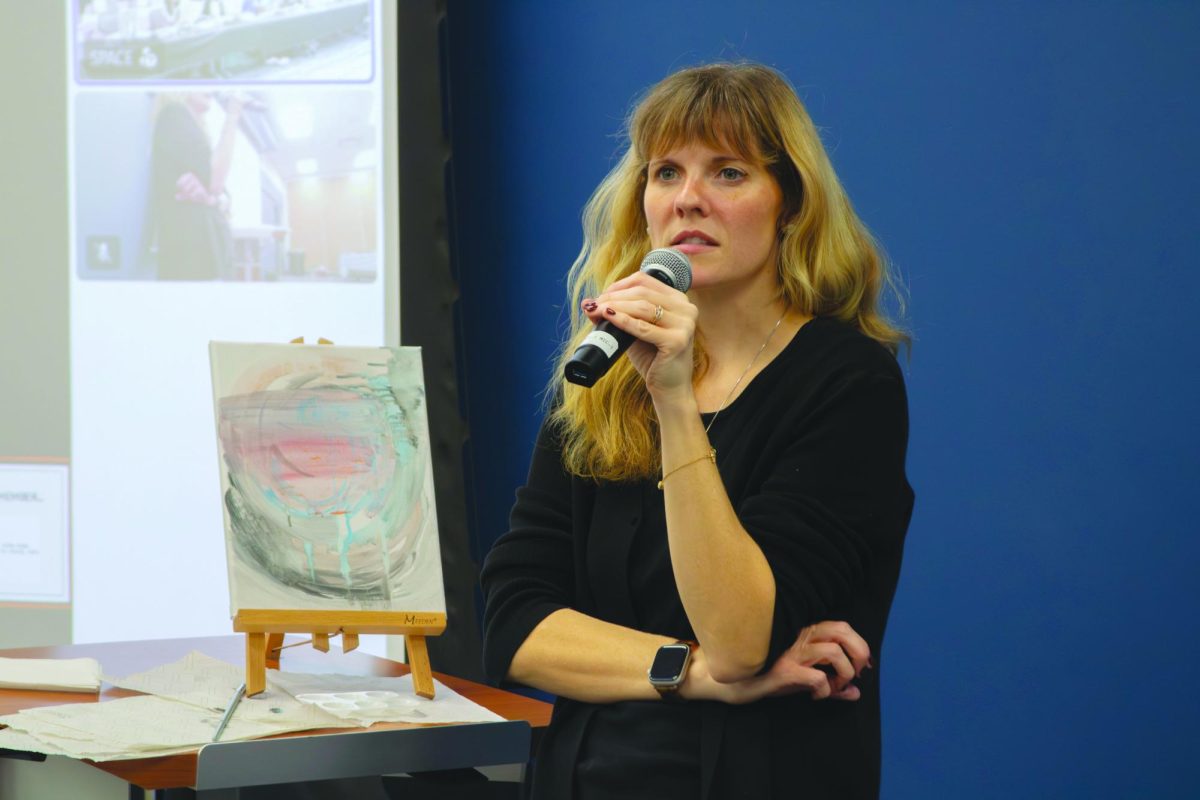

Faculty and student mentors at Dallas College recently held a study tips panel to connect students with campus resources and academic strategies.
Organizer Stanita Jackson, a biology professor, said that the event was designed to address the “whole student,” covering everything from academic notetaking to mental health and basic needs.
Jackson said the idea for this event was because of a classroom discussion where students expressed a lack of awareness regarding support services.
“We were just talking and discussing it with students in our class and talking about students not being aware of a lot of resources that they have available to them at Dallas College and just different strategies where students can kind of take to study,” Jackson said.
Patrice Lockett, a sociology professor and co-organizer, said a primary goal was ensuring students understand how to navigate the differences between high school and college.
Lockett said many incoming students are not aware that high school accommodations do not automatically transfer.
“High school students think that their accommodations follow them to college and don’t.”
Lockett said the panel served as a way to introduce students to the Learning Commons, the TRIO program and the importance of seeking help early. “We want them to understand that if I’m struggling with writing something, I can go to the tutor and they can help me with that. We want them to know that there are resources out there.”
Student panelist Kaehyuni Nguyen, a transfer student at the University of Texas at Dallas, provided advice to current students. Nguyen said he transitioned from simply “copying the board” to using more active methods like question-based notetaking and mind mapping.
“Instead of writing things down and just reading it, what I do is I look at what is given to me and then I write them in the form of questions. I like connecting them together instead of having them all listed, because this format is okay for something like for reading, but if you really want to understand what’s going on, I formed it into something called mind mapping,” he said.
Kayla Starrett, a student who attended the panel, said Nguyens’ specific method for rephrasing notes into questions really stood out to her.
The panel also addressed the physical consequences of academic stress. Nguyen said he once experienced a car accident after staying awake all night to study for a chemistry exam.
“It’s really important to take care of your health and get proper sleep,” Nguyen said.
Jackson said students often neglect basic needs like sleep and nutrition, which negatively impacts brain function during exams. “Your brain gets tired and it blanks out.”
In addition to academic tips, organizers said students also have access to free healthcare and Counseling and Psychological Services (CAPS) to manage test anxiety. Jackson said mastering these resources early is vital for long-term success.
“If you want to be successful and navigate your resources, you want to start here at the community college level, so as you segue into university, you’ll automatically know how everything works,” Jackson said.