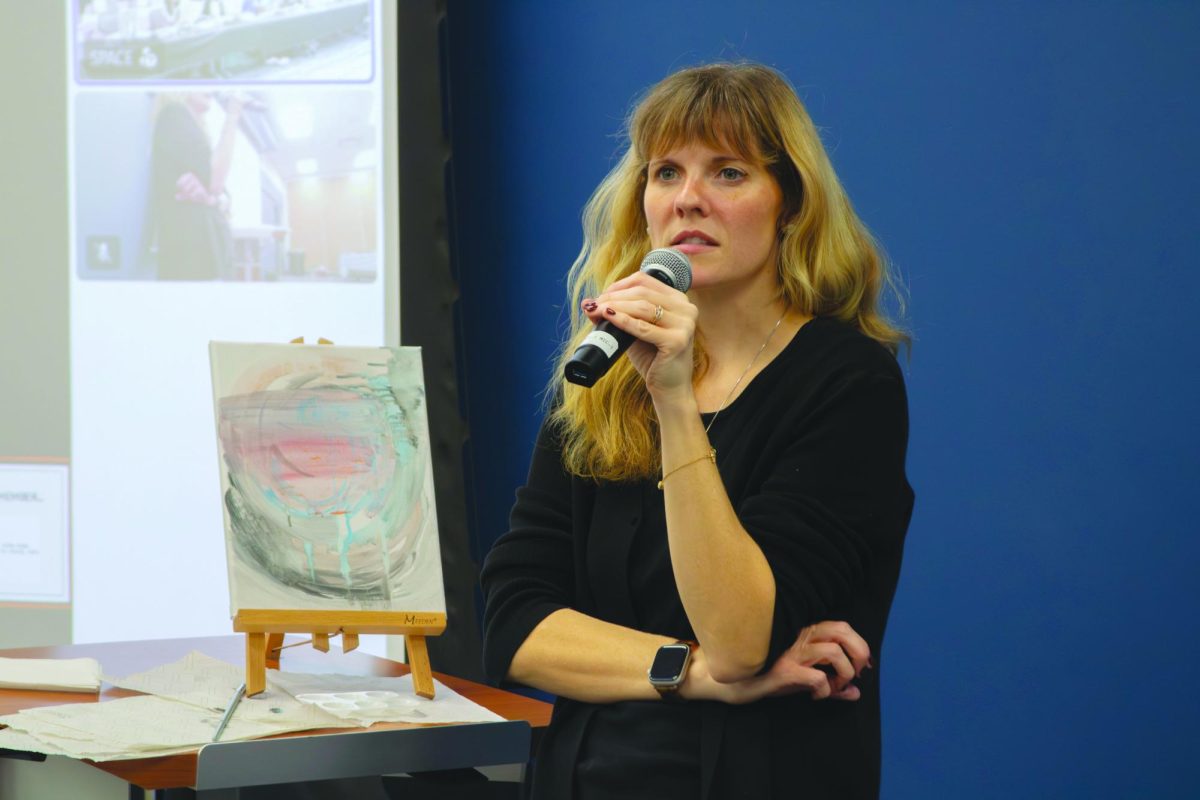

Richland Campus Police’s Sgt. Ana Denova is trailblazing campus history as the first Latina to be in her position, a spot that came five years after being an officer with Dallas College.
What started off as learning about criminal justice during her teen years went from various experiences in the workforce in Dallas that led to her new title in December of last year.
After graduating from Dallas College in 2016, the now 30-year-old Mexican American majored in criminal justice at UNT Dallas and then joined the workforce, a task that wasn’t easy.
“It’s more like networking and who you know. So it was a little bit difficult,” Denova said.
After being sent to the police academy and working her way up in patrol, she spent five years as a police officer for Dallas College.
One of the most notable takeaways from this position upgrade has been keeping ties with peers.
“Being able to have that open form of communication with others is what I think was one of my biggest takeaways as transitioning from being an officer to a sergeant,” Denova said.
For the sergeant, being the first Latina in her position isn’t necessarily a light title to hold.
“It’s a lot of responsibility.
At least I think of it that way because I’m paving the road for the rest of us that want to do the same thing, same job, be in the same position,” Denova said.
But representation doesn’t just end in the police department.
Denova is experiencing this new accomplishment as a way to open a door of opportunities for her own family.
“I have little sisters, and my biggest thing is letting them know there’s so many things that you can do with your life,” Denova said.
Richland’s Lt. Paul Cuara, Denova’s mentor, takes pride in her newest accomplishment.
“She’s very ambitious and takes criticism very well. She’s always wanting to learn and take on new tasks.
Working with her is a pleasure, an honor for me to work with her,” Cuara said.
“I’m very proud to know that a female Latina is moving up the ranks. It’s a good feeling to know that female Latinas in law enforcement are actually being recognized and noticed.”
Latino representation in law enforcement is rapidly increasing.
According to the Bureau of Justice Statistics, Hispanics made up approximately 21% percent of federal law enforcement officers in 2020, and increase from only 13% in 2013.
This increase highlights the changing cycles of diversity in the workforce, something that was not always around.
Cuara said: “I’ll be 56 this year. So for me, there wasn’t a very big Latino push back in the day.
I think now that’s changed. Things are changing. You’re starting to see more Latinos in law enforcement.”
“I think it’s really important that we do have that representation, not only with the Latino population, but just with the entire diverse community that we have,” Denova said.
“People want to be able to see somebody that looks like them in uniform, because they feel that connection to them.”