As the semester progresses, so do the classes, programs and activities taking place on campus. One such program is in the Undergraduate Research program. Its members represent Dallas College’s chapter of American Society of Mechanical Engineers and are recognized under the college’s ARISE (Academic Research Instruction with STEM Experiences) programs. This year will be the second year in a row the college participates in ASME’s Student Design Competition in Texas, placing fifth overall last year. However, what are these programs, and how do students prepare to compete at the state level?
Jessica Silva Gonzalez serves as the project lead for Richland Campus’ STEM (Science, Technology, Engineering, and Science) Institute. “So, there’s several programs. And so the big umbrella of it all is the undergraduate research program,” she said. These programs provide students with short-term workshops and long-term research positions depending on their field of interest and experience. “So the workshops are meant for, like, introductory to get an idea if you like it or not. However, for the ARISE ones, we are looking for students specific to those majors…Same thing for the ASME, because it’s a robotics team,” Gonzalez said.
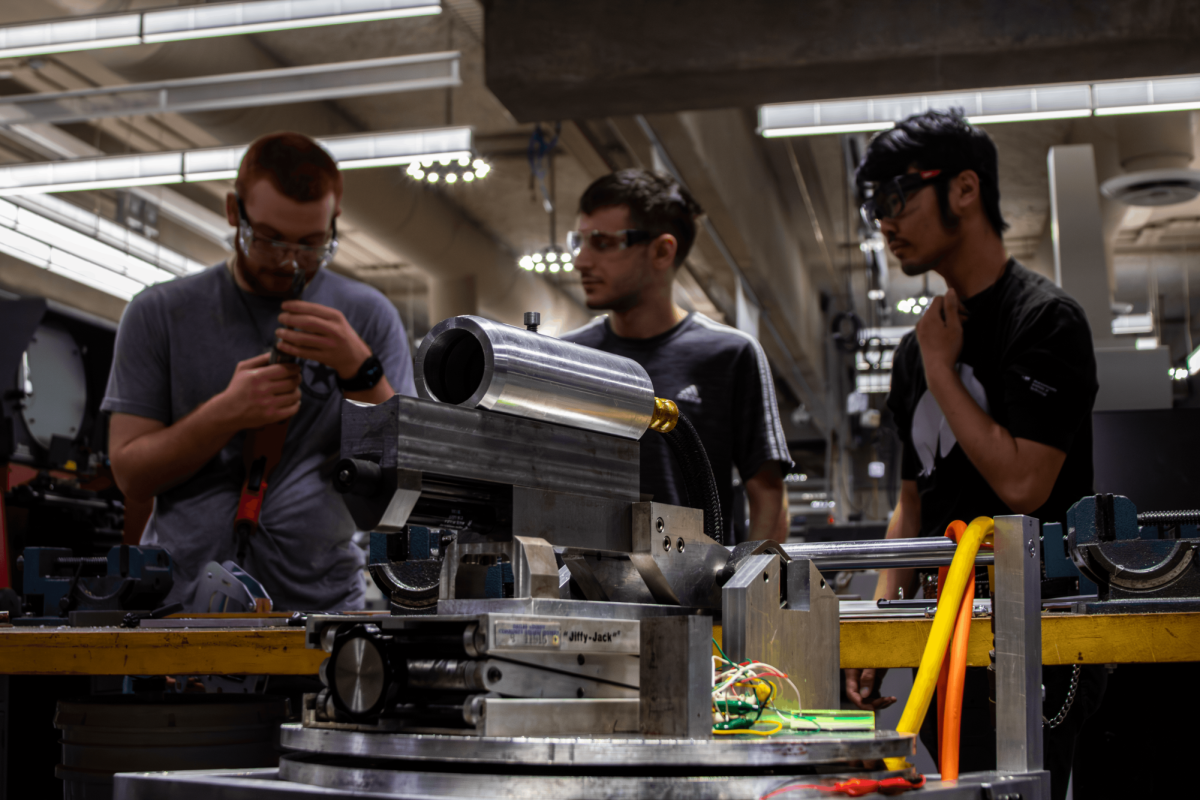
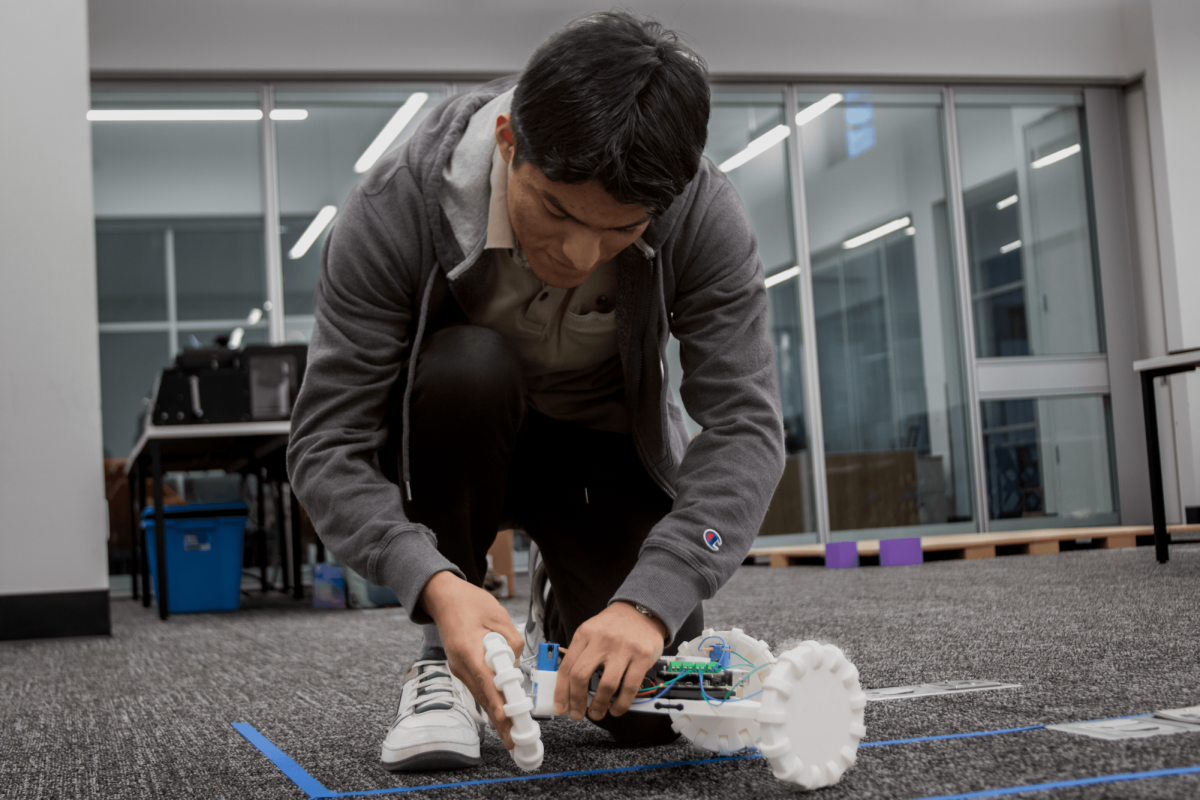
For ASME, the team undergoes training in a 16-week course to develop a physical device for testing. Julian Castellanos, the ASME team’s lead for software and controls, said that in the program they were “basically given instruction on how to code, how to 3D model in CAD, and how to design circuits in order for us to make a product prototype using an Arduino or some kind of like microcontroller.” The program gives students the tools to develop their own robotic designs and a collaborative space with other students and faculty.
John Parker, a mechanical engineering student and team lead for Richland’s ASME chapter, said the program allowed his team to build strong connections. “They’ve gone through the prototype and development stage, and I was a facilitator for that. So, a lot of us do have previous working experience, mainly because we kind of built that community with the undergraduate research program,” he said. These connections carried into this semester as they work toward their competition. Due to the variety of tasks and the changes implemented every year, teams must adapt to every change to qualify, let alone place first. Changes can happen not only to the objective, but also to the rules of the competition.
“This year the device got like incrementally smaller, and what I mean by that is last year we had a footprint of 20 inches by 20 inches by 20 inches, basically a 20-inch box. This year we have basically a 6-inch by 4-inch by, I want to say 6-inch block for our actual device that needs to move, sort and deposit all these materials,” Parker said.
While these conditions make it difficult to design an effective machine, Parker is confident that he will be able to lead his team through the process. “My time in the military has translated kind of very heavily into that role model figure of someone being more of a leader than a manager.”
He also sees the environment provided by Dallas College as providing opportunities that he and his team wouldn’t have otherwise. “I think it’s been really gratifying for me knowing that there’s a lot of community college students that want to participate at a university level for competitions,” he said.
While the program welcomes technology and engineering students, this does not mean their team is limited to just students from these pathways. Leigh Arriane Buendia, the team’s director for operations and communications, enjoys working with her peers for competition while taking classes with Dallas College’s School of Creative Arts, Entertainment, and Design. Her role in the team is based around keeping the team connected and funded. Buendia said, “So for example, Raspberry Pi’s, like the microcontrollers, the filaments, the camera, all these things, we need money for it. That’s just one side.” By keeping the team connected and sourcing sponsorships, Buendia keeps her team operational and thriving.
As a member of the ARISE program for ASME, she sees the experience as a great way to support the people around her. “One of the reasons why I joined ASME is because of the people who are already there. It’s been really rewarding,” she said.
As an International student from the Philippines, Buendia found it difficult to connect with students on campus when she began taking classes at Dallas College. “When I came to Dallas College, I didn’t really have any friends or anything like that. I thought, like, people were very independent and the community was kind of hard to reach.”
However, as Buendia explained, the ARISE program introduced her to the ASME team and its students. “It’s very different coming from, like, another culture and all that, but after I joined ARISE, I have, like, basically my own community now of people.”
When asked what the ASME team’s goal was on campus after competing, Parker aimed to get more attention toward the school’s undergraduate programs, especially ARISE. “The biggest thing I do want to gain, at least for this semester leading into possibly the next year’s competition, is definitely more exposure from faculty and more exposure to faculty and students. I feel like there are a lot of opportunities around the colleges, around all the colleges. It’s kind of hard to tell what each college is doing.”