While the highly anticipated Winter Olympics are underway, there is a group of women who will not be there.
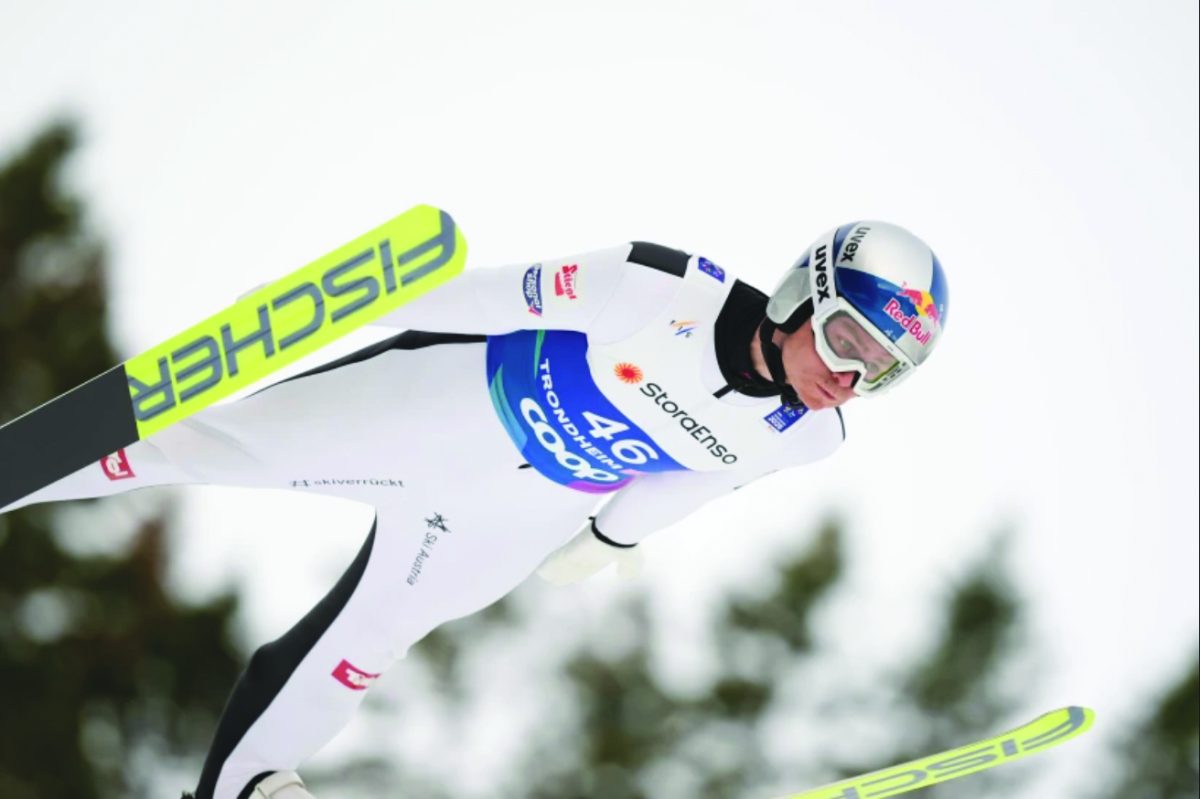
Since 1924, the Olympic sport Nordic combined has been held at every Winter Olympic Games, except it has only been contested by men. Nordic combined remains the only Winter Olympic sport without a women’s category. This is not because women do not train or compete in the sport; rather, the International Olympic Committee has consistently refused to add it to the Olympic program.
The IOC has justified this decision by citing “low participation” among women. But that reasoning raises an obvious question: How can participation be measured when women have never been given the opportunity to compete? Over the years, the Olympics have frequently added and removed events on a trial basis. Many people remember the viral moments from the breakdancing category at the 2024 Summer Olympics, which has since been removed for the 2028 games and beyond. Yet despite this option to experiment, the IOC has never extended the same opportunity to women’s Nordic combined.
The exclusion is especially difficult to justify because the men’s and women’s versions of Nordic combined are identical. Unlike other sports where events differ due to physiological considerations, Nordic combined presents no such issue. The sport consists of cross-country skiing and ski jumping, both of which already have women’s Olympic events. Somehow, however, combining the two suddenly becomes a barrier.
This issue entered mainstream media through Nordic combined skier Annika Malacinski, who called out the IOC on social media for what she described as blatant discrimination.
“We do the same sport. We jump the same jumps. We ski the same course. We make the same sacrifices. Everything is the same. Except my gender,” Malacinski wrote.
Her brother, Niklas Malacinski, is also a Nordic combined skier and is currently competing in the Olympics. Annika Malacinski has said she will attend the games to support her brother, but also to raise awareness and advocate for change, hoping the IOC will finally listen.
This situation highlights exactly why representation matters. The IOC continues to argue that women’s Nordic combined lacks participation, yet when the world’s largest sporting event refuses to showcase the sport, low participation becomes inevitable. Without an Olympic pathway, young girls choosing a sport with dreams of competing at the highest level are unlikely to pursue one that cannot take them there.
Until women are allowed to compete in Nordic combined at the Olympics, the IOC’s reasoning and decision is not only flawed, but self-fulfilling and blatantly sexist.