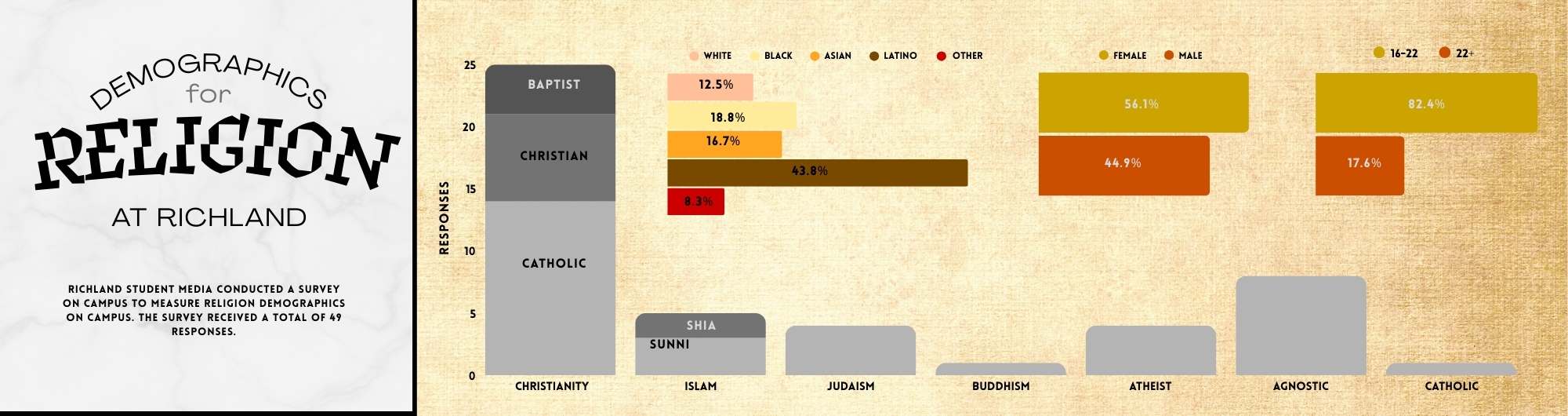

Since the 1990s, the United States has experienced one of the biggest religious shifts in its history. About 90% of Americans identified as Christian in 1990. Today, that number is closer to 60%. Researchers say the drop is tied to generational changes, political polarization, rising secularism and a major decline in trust toward religious institutions.
Gallup reported in 2023 that confidence in organized religion had fallen to a record low, with only about one-third of Americans expressing strong trust in churches and religious organizations. Many experts say when people lose trust in religious institutions, they often lose trust in religion itself. Young people feel this most strongly. Gen Z is now the least religious generation in the country.
At the same time, interest in spirituality has not disappeared. Instead, many young adults describe themselves as “spiritual but not religious,” choosing meditation, mindfulness or nature-based practices over traditional worship. Colleges across the country have responded by creating interfaith groups where students can discuss beliefs and identity in open, welcoming environments. Although they come from different traditions, the priest, rabbi and imam interviewed for this story all gave similar reasons for why religion is trending downward—especially among young people.
Rabbi Levi Dubrowski, from Dallas, Texas, said the decline is tied to increasing individualism and what he called a “self-focused culture.” He believes people today are more interested in personal comfort and self-care than in spiritual discipline or community. He said many young adults think,“Why do I need organized religion in my life?” simply because they don’t feel a need to search beyond themselves. He also said that because people have more free time and more distractions than ever, it becomes easier to ignore deeper questions about life and belief.
Imam Qutaibah, from Duncanville, Texas, said that for many young people, the problem is relevance. He explained that religious teachings often feel disconnected from real life, especially when sermons are presented only as strict lists of rules. Young adults, he said, want context, nuance and explanations.
Without that, they tune out. He also believes that Western secularism—where religion is kept separate from public life—has made faith feel less important to younger generations. But he stressed that poor communication from religious leaders makes this problem worse.
Father Michael Forge, from Plano, Texas, connected the decline to cultural changes going back to the 1960s. He pointed to the sexual revolution, shifts in family structure and what he described as a loss of “objective truth.” He said religion once provided stability and authority, but modern culture often rejects those ideas in favor of personal preference. When family stability weakens, he said, institutions like churches weaken as well. Even with the decline, all three clergy members say they are seeing signs of renewed interest.
Forge said more non-Catholics, especially young men, have shown interest in joining the Church because they appreciate its clear teachings and long history. Dubrowski said recent world events have pushed some young Jews to reconnect with their faith and identity. Imam Quaibah said global conflicts have also led to a rise in young Muslims seeking stronger spiritual grounding.
Religion may be declining, but spirituality is not. Many young people still want meaning, purpose and a sense of belonging. They are simply looking for it outside traditional institutions.
Whether this leads to a revival of organized religion or the rise of entirely new forms of spirituality is still unclear.
But one thing is certain: Gen Z is not abandoning belief. They are redefining it.