In 1948, Supreme Court Justice William O. Douglas wrote in his dissertation, “Power that controls the economy should be in the hands of elected representatives of the people, not in the hands of an industrial oligarchy.” His statement was very straightforward, and it seems that Douglas was warning the country of the dangers of an economy built around the desires of corporations and industrial giants, neglectful of the needs of the average American citizen.
This imminent warning was brought up more recently in former President Joseph Biden’s farewell address to the Union.
“Today, an oligarchy is taking shape in America of extreme wealth, power and influence that literally threatens our entire democracy, our basic rights and freedoms, and a fair shot for everyone to get ahead,” Biden said.
As Biden remarked in his address following this statement, the threat of an oligarchy has stood at the gates of American democracy multiple times throughout history.
“We’ve seen it before, more than a century ago,” the former president said. “But the American people stood up to the robber barons back then and busted the trusts.”
The former president’s claims are backed by evidence from the past. Historically, wealth has often been synonymous with power in the U.S.
“If you look at who was sitting in the second Continental Congress and writing the Constitution, or who was making the laws of the land, it’s always been wealthy, well-educated white men,” said Richland history professor Nicole Coffelt.
Coffelt said early voting laws in the country granted only land-owning white males a voice in choosing elected officials. Additionally, she spoke about conditions during the Gilded Age of the late 1800’s, a period of time in American history that is often characterized by a surge in industrialization and the inception of labor unions.
“The Gilded Age is when you start to see the populists and the farmers beginning to organize and beginning to have a voice in government,” Coffelt said. “It’s the birth of unions, whether it’s farming or industry.”
Coffelt said that more men had the right to vote in the 1800’s. This is because the original nature of early voting laws, which required ownership of land, no longer existed to prevent impoverished white men from voting. The creation of unions and the inclusion of working-class men in electing officials likely played a major role in introducing reforms on corporations regarding wages and working conditions.
Coffelt also discussed the financial status of American presidents throughout history. Former President Franklin D. Roosevelt, for example, who ran the country during the Great Depression and introduced the New Deal to create more jobs and provide stability for the working class, came from a very comfortable background.
“He was a wealthy man,” Coffelt said. “He came from a wealthy family. All the Roosevelts did, and the Kennedys.”
So, wealth has consistently defined the value of a person’s power in the U.S. Before discussing the oligarchic characteristics present in American society today, it is important to define an oligarchy as a form of government itself.
According to the global nonprofit organization Oxfam America, oligarchy is the ability of an ultra-wealthy elite to shape political decisions that increase their wealth. In an oligarchic society, a small percentage of people hold the majority of power and control how the society operates. Data provided by the Federal Reserve shows that in the U.S. 75% of wealth is held by the top 10% of American households. Additionally, research conducted by Oxfam America shows that seven out of 10 of the world’s largest corporations are owned by a billionaire, signaling that wealth is consistently streaming into the pockets of the ultra-wealthy.
So, it could be argued that the governing powers of the U.S. and the various factors that control its economy today share many similarities with the barons that existed in America’s past.
“It’s often been determined that today is the second Gilded Age,” Coffelt said.
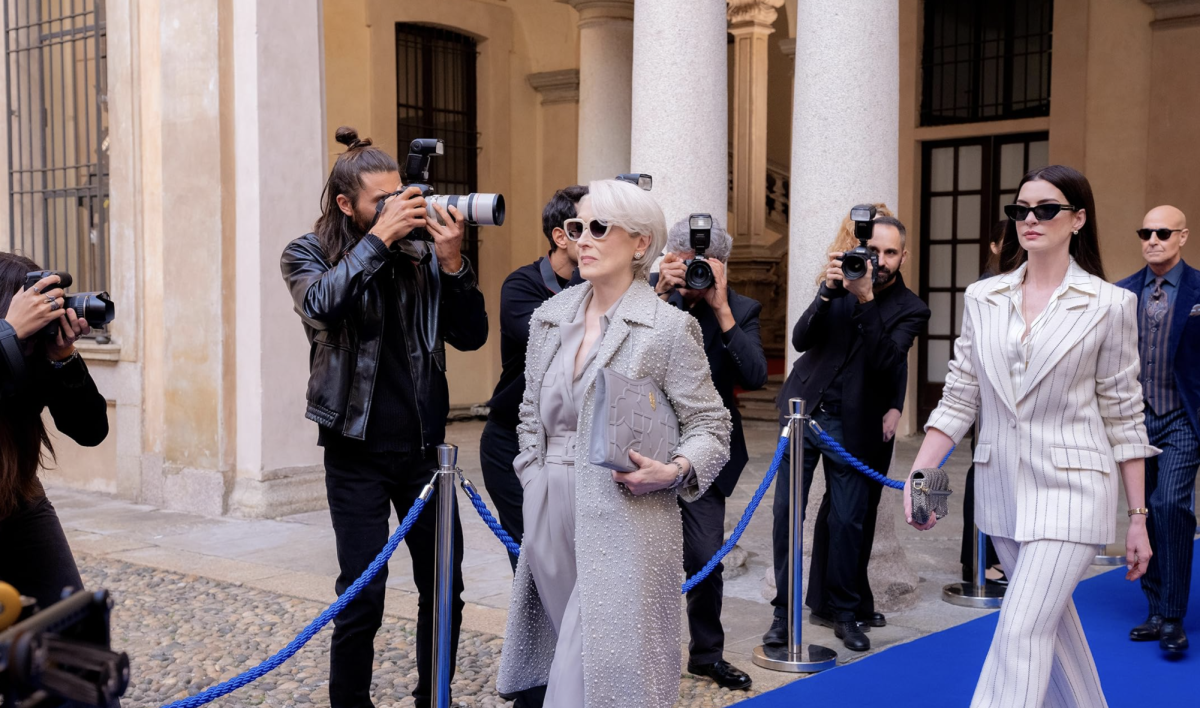
President Donald Trump’s inauguration in January hosted an audience of tech moguls and billionaires, with Google CEO Sundar Pichai, Tesla CEO Elon Musk, Amazon founder Jeff Bezos, Apple CEO Tim Cook and Meta founder Mark Zuckerberg lining the rotunda of the Capitol while lawmakers sat on a lower level and watched the event on screens. The presence of these hyper-wealthy corporation owners and CEOs—as well as their closer proximity to the president of the U.S. in comparison to the senators and representatives that were seated on the floor—arguably seemed to represent their heightened participation in the active legislation of the country, regardless of their status as unelected officials.
According to Oxfam America, Trump has 13 billionaires in his administration, with a combined total wealth of $450 billion. Trump recently hosted a promotional event for Tesla March 11, with Tesla vehicles lined up on the lawn of the White House while he spoke about the specs and price points of the cars.
The practice of wealth being utilized to sway political direction is not specific to a single party or branch, either. According to the Statista Research Department, there are roughly 13,000 active lobbyists in the U.S., outnumbering Congress members 20 to one. Lobbyists generally operate under shared firms and donate money to politicians and government agencies to influence lawmaking decisions.
Since 2008, spending on lobbying in the U.S. has averaged around $3.3 billion every year, according to research conducted by Statista. The pharmaceuticals industry is the highest in lobbying spending, with insurance and technology at second and third, according to data provided by the Senate Office of Public Records. The same records also show that Kamala Harris, presidential candidate and former vice president, received $596,310 from lobbyists during her 2024 campaign, while Trump received $368,518. Every lawmaker is eligible to receive funding from lobbyists, including cabinet members and federal judges.
The U.S. has turned into an oligarchy, sacrificing the very democratic identity that it once boasted about.
The iron law of oligarchy, a political theory that was first developed by sociologist Robert Michels and published in his 1911 book “Political Parties,” all forms of government, regardless of how democratic they may be at their conception, will inevitably develop oligarchic tendencies. The voting interests of elected officials, which are supposed to reflect the needs of the people they represent, are attempting to be bought out by lobbyists and corporations for their own profits. Public federal agencies like the Department of Education— which, according to Margaret Huang, human rights activist and president of Southern Poverty Law Center, is largely responsible for ensuring civil rights protections in schools and providing funding to low-income populations—are being dismantled and potentially becoming privatized through private school vouchers, as Texas governor Greg Abbott said during his visit to Kingdom Life Academy in Tyler.
It is naive, however, to believe that the oligarchic traits that exist within the U.S. government are specific to a single party or branch. American politics need to deviate from their traditional monetary influence and return to their intended purpose of representing the needs of the average citizen.